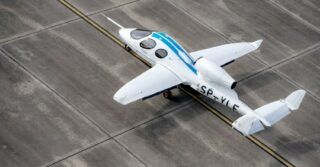
Fast, lightweight and fuel efficient: RACER, the high-speed helicopter reaches flying speeds of up to 400 kilometers per hour. The components of its outer shell are made by an innovative, highly automated manufacturing process. A research team at the Fraunhofer Institute for Casting, Composite and Processing Technology IGCV developed the innovative, sustainable method together with Airbus Helicopters.
At over 400 kilometers per hour, RACER — short for Rapid and Cost-Effective Rotorcraft — moves through the air much faster than conventional helicopters, which travel at around 230 to 260 kilometers per hour. But this is not the only special feature that sets the helicopter apart. The top layers of its side shells consist of carbon fiber reinforced plastic (CFRP), the sandwich core from phenolic resin honeycombs. Until now, these large-size sandwich shells have been produced manually by hand lay-up — an expensive, time-consuming process.
In cooperation with Airbus, researchers at Fraunhofer IGCV in Augsburg have developed a highly-automated process for manufacturing the CRFP shell components. The development is being funded as part of the CleanSky 2 program of the European Union. A fine example of European coordination and integration, the demonstrator platform brings together over 25 consortia of industry and science organizations in 13 countries, supported by a large-scale ecosystem of SMEs — united in the EU’s effort to achieve cleaner air travel.
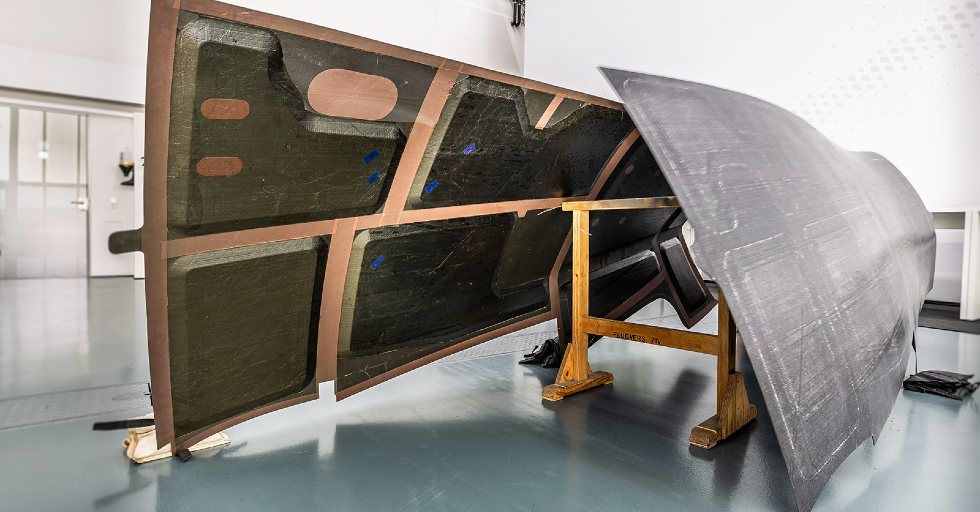
Fot. Airbus Helicopters GmbH
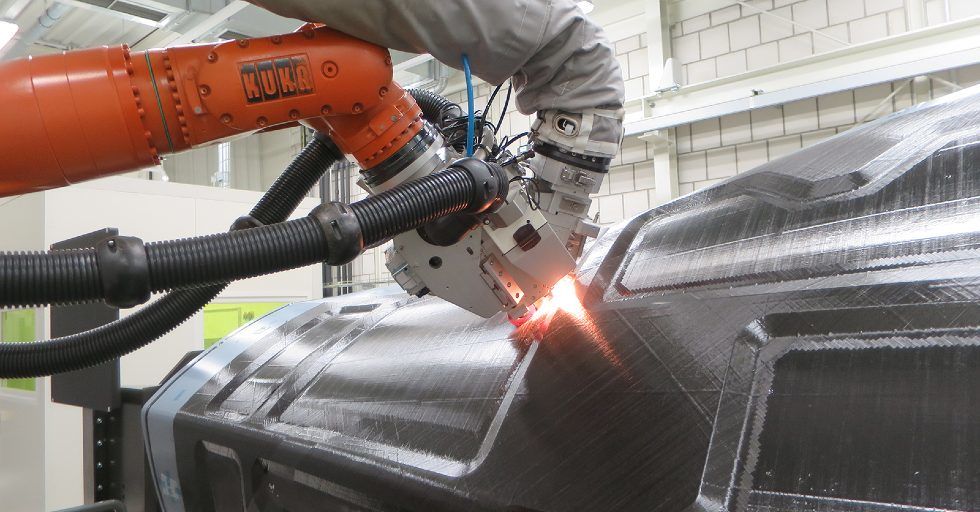
The 3.4 x 1.5 meter shell segments, manufactured by this automated process, form the rear right and rear left parts of the outer skin. They connect the rear tail boom to the cockpit. “To date, the shells have been made using carbon fiber reinforced lightweight materials, but we have advanced the production process. It is now based on what is known as the Automated Fiber Placement process,” says Thomas Zenker, scientist at IGCV. A robot places the continuous fiber-reinforced pre-impregnated materials in automated fashion. The process involves the use of unidirectional tapes that have better mechanical properties and generate less waste than web-based plastic composites. The sandwich core, made up of phenolic resin honeycombs, increases the stiffness of the structure, its strength comes from the fiber reinforced skin layers. An adhesive film ensures the transmission of force between the core and the skin layers.
“Before the material is cured, the robot places the high quality fibers in a tool. It does this by following a specially developed programming methodology. The tool concept was developed specifically for the process chain. Its surface defines the shape of the fibers during the AFP process. The complex geometries of the variably formed sandwich pockets are taken into account. In other words, the tapes are placed precisely where the structure of the finished component requires”, says the engineer, summarizing the process.
RACER holds huge sustainability potential
Depending on the stacking sequence and the fibers, a CFRP component manufactured using the Automated Fiber Placement process achieves a higher degree of resilience than a steel element, while weighing significantly less. “This is an important aspect of aviation, where every kilogram saved helps reduce fuel consumption,” says the researcher. The material saved reduces the weight of the shell segments by five percent.
This can improve the ecological footprint by up to 15 percent per shell segment, depending on the energy mix used during production.
Automated Fiber Placement for low-waste processes
The advanced production processes offers additional benefits too: Thanks to the more efficient process, Zenker and his team are able to reduce production waste from 45 to 20 percent, for example. Depending on the number of helicopters produced, the automated process is also able to achieve a production cost saving over the conventional manual lay-up method. At a production rate of 65 helicopters per year, this saving amounts to 20 percent, for example.
The two side parts for the helicopter prototype were completed in August 2020. Airbus then took care of the curing process and the non-destructive material testing, which involves the use of ultrasound to examine the components for potential defects. New material and production process combinations require close scrutiny, especially in safety-critical sectors such as aviation. Additional characteristics of material samples were determined and evaluated as part of the Permit-to-Fly procedures. These mechanical tests are the prerequisite that has to be met for the demonstrator to be cleared to fly.
The components from Fraunhofer IGCV passed the test and are currently being assembled into a prototype. The sustainable helicopter is scheduled for completion and will take its first test flight in early 2022
The high speed it achieves makes it especially suitable for use in all types of emergency situation. Conceivably, however, it could also be used as an air taxi to transport passengers between urban centers — without a traffic jam in sight.
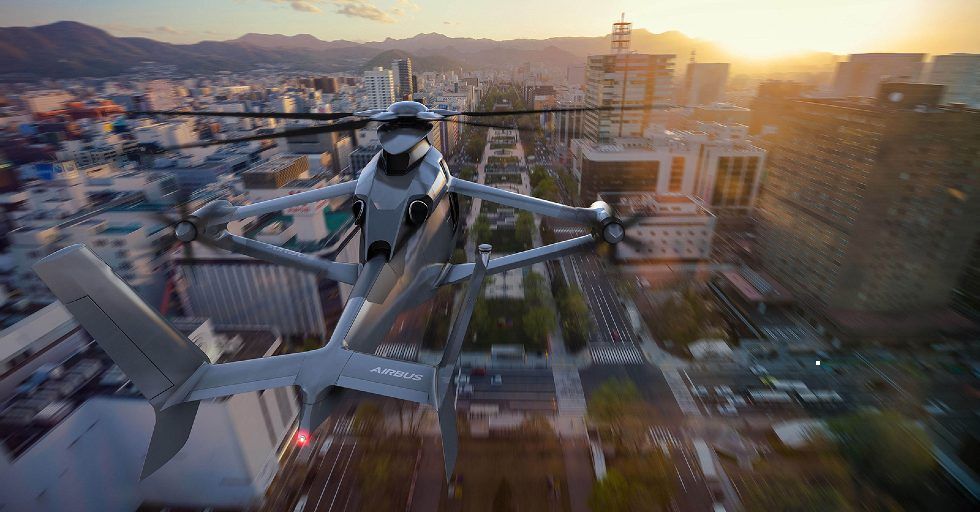
Fot. Airbus Helicopters GmbH
![Forecasts, Opportunities, and Challenges for the Polish Industry in 2024 [ANALYSIS]](https://industryinsider.eu/wp-content/uploads/xIndustry-40-320x167.jpg.pagespeed.ic.o8zijDQlIJ.jpg "Forecasts, Opportunities, and Challenges for the Polish Industry in 2024 [ANALYSIS]")